The Most Consequential Serial Comma
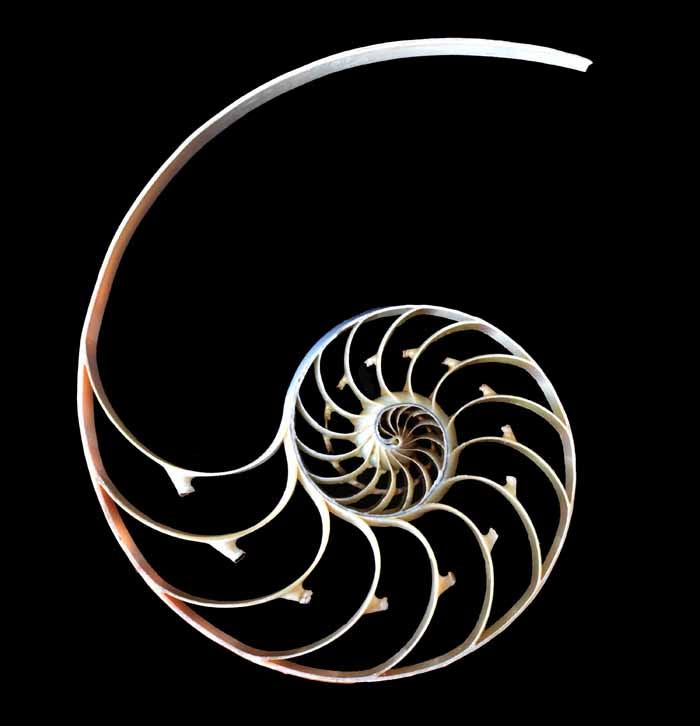
A Shielded-Shield of Natura Gaea (Earthea) and Nature (Nurtures Gaeaxxes)


“The powers not delegated to the United States by the Constitution, nor prohibited by it to the States, are reserved to the States respectively, or to the people.” - Article of the Tenth (Amendment)[1]
The serial comma at the end of the Article of the Tenth (Amendment) may be the most consequential of its kind, as it defines the States as Republics both composed of and comprised by their Human Inhabitants or People. Such was the precision of the legalese employed by our Cofounders that produced the telescoping structure of each paragraph of the U.S. Constitution (our General Government’s Governance Document) as well as the Instrument (a Bill of Powers) itself; and in-deed the U.S.A. Declaration of 1776 (our Republics’ Formation Document).
John Jay, appointed by George Washington, was the first Chief Justice of the United States’ General Government of our Union. Judge Patterson of the Jay Court delivered what may be the best explication of this notion in context, as part of the below Opinion of the Court written in 1795:
A distinction was taken at the bar between a state and the people of the state. It is a distinction I am not capable of comprehending. By a State forming a Republic (speaking of it as a moral person) I do not mean the Legislature of the State, the Executive of the State, or the Judiciary, but all the citizens which compose that State, and are, if I may so express myself, integral parts of it; all together forming a body politic. The great distinction between Monarchies and Republics (at least our Republics) in general is, that in the former the monarch is considered as the sovereign, and each individual of his [or her] nation as subject to him [or her]... But in a Republic, all the citizens, as such, are equal, and no citizen can rightfully exercise any authority over another, but in virtue of a power constitutionally given by the whole community, and such authority when exercised, is in effect an act of the whole community which forms such body politic. In such governments, therefore, the sovereignty resides in the great body of the people, but it resides in them not as so many distinct individuals, but in their politic capacity only. - Penhallow v. Doane’s Administrators, 3 U.S. (3 Dall.) 54 (1795).[2]
Though the excerpted Opinion comes via the Judicial Branch of the Government Of, By, and For “the United States of America;” or Us, we note that seeing the States called “Republics” could cause some degree of surprise. However, when we contemplate that the U.S.A. Formation Document (the Declaration of Independence) formed this State, the United States of America, as a new kind of Republic in that it is in Legal Terms an entity both composed of and comprised by the Individual Sovereignties of its People; it may become less strange. Whereas, our Republic of the U.S.A. is composed of smaller self-identifying regions as States or Republics, themselves being Legally the intermediate aggregates of their individually sovereign human Inhabitants, who are their coequally vested Members.
That is, the Individual Inhabitant is Sovereign and by way of our State Constitutions provisioning for Local Governments our Sovereignties are aggregated as the States referred to in the U.S. Constitution (which includes the Amendments); and as well that our Republic, the United States of America is a composite and:
The same States are united and do Assemble in Congress as the General Government of our Federal Union, or Federation of States made into a Compact by the Form and Substance of each State’s Act of Ratification in conjunction with that of the U.S. Constitution itself.
Whereas, though the said General Government is not a national one (for the same reasons), that body politic of the Union as the many States assembled in Congress forming a sort of Great Council modeled on the Iroquois Great Law of Peace or Gayaneshakgowa (Kaianere’kó:wa), as well as the Governments of the united States, and the individually sovereign Inhabitants who are the coequally vested Members of these Lands; could each and altogether inclusive of the concept itself, as well as the foundational precept of Native Coequality or Private Justice, be referred to as Republia.[3]
That the meaning of the statement that this State, the United States of America, our Republic was in-stated forever immutably as the Unit of Supreme Legal Authority may become clearer. Whereas, no individual or institutional power could ever raise itself above the Supremacy of our Authority to (Self) Govern, as the U.S. Constitution that provides for the State (Local) and Union (General) Governments which altogether form our Federal Government, is by its very inception Structurally Subordinated to our Authority as well as forever Owned by us, the People of the United States:
We, the people of the United States, in order to form a more perfect union, establish justice, insure domestic tranquillity, provide for the common defence, promote the general welfare, and secure the blessings of liberty to ourselves and our posterity, do ordain and establish this Constitution for the Unites States of America.
- U.S. Constitution, Preamble (Prefixed Recitals Clause) [4]
This is one reason why each of the State Constitutions has a White Star on our flag, governed by the Authority of the People as Authors and Owners of the U.S. Constitution represented by the Blue that encompasses them, as among the other Living Creatures or Nature represented by White Stripes and the Being (Truth, or God) of Earthnature represented by the Red Stripes; that are all together the Natural World that we all call Home (the flag itself). Whereby the composite of the States constituted by their constitutions into intermediate aggregates of the Individual Sovereignties of the People, who as human Inhabitants are the coequally vested Members of the United States of America (our Republic) answer only to among the Powers of the Earth, the “Laws of Nature and of Nature’s God” (Truth, or Being).
That, the Seated Authority of the Supreme Judge of the world or Tribunal of Earthaven (Earth, Nature, & Creator) is superfluid and moves superfluously such that when exercised “in virtue of a power constitutionally given by the whole community...is in effect an act of the whole community which forms such body politic.”
The above as well as the constructs of the clause itself forms the primary bases Constituting our individual sovereign Right to enforce the Mutual Guarantee of the U.S. Constitution, as well as the Original and Exclusive Jurisdiction of the Supreme Court regarding matters related thereto. That, where it is true that Common Law among the greatest and most complex human civilizations, held Motherhood and the Diverse Creativity of our Children paramount as the empirically observable Truth of the ecosystems of our fellow earthly inhabitants, where complexity is diversity,—perhaps we and our representatives in government ought to take note as well.
Where it could even be observed that in the Declaration of Independence “to alter their former Systems of Government” was not to change them; but to “dissolve” them as by the universally salutary solvents of Earth, Life, and Nature; the Chaoses of Creation and Preservation of Creatures which thereby abolished them into the aboriginal states of nature from whence we all came, and were made uniformly complete by way of return to concordance forthwith that which is the shielded-shield of Natura Gaea (Earthea) and Nature (Nurtures Gaeaxxes). [5]
Expressed the Free and Equal Station of Choice becoming the one whole perfect Dynamism of our beautiful planet, which is both limitless and sustainable; something that would be impossible to conceive of but for that it is.
As jointly proven by the fossil record and the fact that we do exist, perhaps raises a question: Do we want to remain the product of survival, as best conforming or “fittest” some unknown negative catalyst; or do we as a species aspire to become part of something shared that is greater than ourselves?